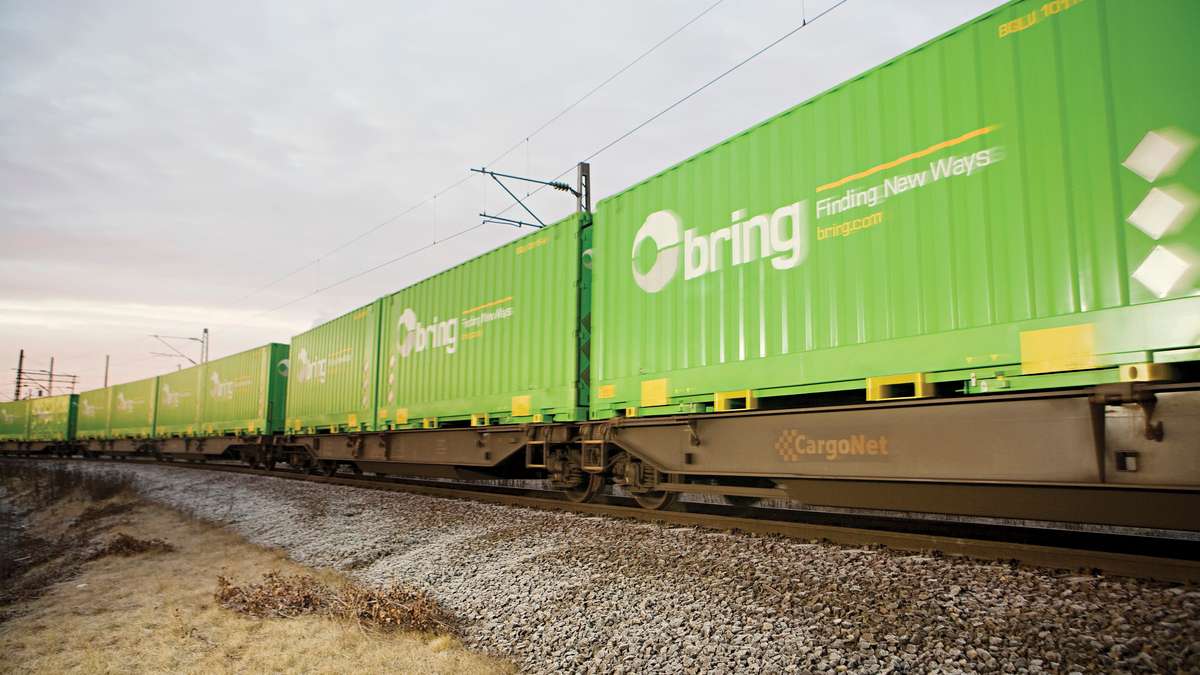
When goods are shipped from one location in Norway to another, via Sweden or Finland, we call it Norwegian goods in transit (NVIT). It’s an option we – and many others – often use, as it can make transport cheaper, faster, and simpler.
There are now stricter requirements in place for NVIT goods
Because the goods are temporarily outside of Norway during transport, they must go through a transit procedure. That means customs authorities need information about the contents.
In 2025, the EU introduced stricter information requirements for goods transported within the EU customs area (NCTS 5). NVIT goods were temporarily exempt, which meant simplified data could be submitted. But this has now changed.
As of March 31, new requirements have been introduced, which mean that we, as the carrier, must provide the Norwegian Customs authorities with more detailed information for each item being transported. This means we may need more information from you.
What do you need to do?
First of all, you need to check whether your goods will be in transit.
You can do this by checking if you're shipping to any of the postal codes where goods are transported via Sweden or Finland. This also applies to returns. Here’s the overview:
- Both ways: 0001–6999 to and from 8300–8599, 9300–9499, 9000–9159, 9170–9181, and 9188–9299
- Both ways: 0001–7999 to and from 9160–9169, 9182–9187, and 9500–9999
- Both ways: 8000–9769 to and from 9770–9991
The new requirements apply to all shipments to and from these postal codes, regardless of where the sender is located. This means the requirements also apply to goods imported into Norway that, after customs clearance, will be forwarded to recipients within the relevant postal code areas in Northern Norway. In these cases, the goods are temporarily sent out of the country again, which is why we need the transit information. In other words: The requirements apply to both domestic shipments and international shipments with final delivery in Northern Norway.
Note: This does not apply to express services transported by air.
For shipments sent from other countries
For VOEC businesses
Are you a VOEC customer with us? For shipments where we submit VOEC data to Norwegian authorities on your behalf, we already have the necessary transit information. You therefore don’t need to provide it again.
However, if you use other customs agents as a VOEC business, you must provide transit information for all item lines in each shipment.
For businesses that aren’t VOEC registered
If you use us for export/import declarations on individual shipments, you don’t need to provide transit information. However, if you use consolidated/bulk declarations, you must provide transit information for all item lines in each shipment.
If you use other providers for import/export declarations, we also need the transit information for all item lines in each shipment.
What information do we need?
In addition to your normal transport booking, we’ll need the following for each item line:
- Tariff number (HS code), minimum 6 digits
- Description of goods
- Gross and net weight
When you book transportation, you have two options:
- Add the “transit information” to shipments to and from the selected postal codes.
- Add the “transit information” to all your shipments in Norway.
If you choose option two, you’ll be sharing more information with us than we need for the transit process. It’s important to remember that you are responsible for how you handle your customers’ personal data (GDPR). You must therefore assess for yourself whether sharing this information with us is in line with the applicable regulations.
We generally have strict processing requirements in our systems and are working on a solution that will delete any unnecessary information as soon as possible. This has high internal priority for us.
How do you send us the information?
You can submit the transit information through the booking solution you use today. You can already do this via our booking APIs, and we’re working to make this functionality available in other booking solutions as soon as possible. We’ve also asked TA providers to make this functionality available in their interfaces.
This functionality will be available in the Mybring web solution from October 1.
If you're planning to adjust your own systems to meet the new requirements, feel free to tell us. Then we can coordinate and help make the transition smoother.
What happens now?
Norwegian Customs is fully aware that it won’t be possible to meet all the new requirements immediately when thousands of items are being transported. They’re currently looking at how we can submit information that is considered “good enough.”
In an excerpt from nholt.no, Customs says (translated from Norwegian):
In this context, “good enough” means that you must do your best to classify and provide the correct item number for as much of the cargo as possible.
An item number like 54.02.53 gives no indication of what type of goods are being transported, and is therefore of no value.
Businesses should aim to find solutions that ensure the goods are at least categorized correctly.
If you only have a few items to send, it will of course be easier to provide the correct information.
What if you don’t provide enough information?
For the time being, no shipments will be stopped, but this may change in the autumn.
We have received indications that the Norwegian Customs Authority will tighten the requirements after the summer. This could mean that they start stopping shipments that are missing the required information. Therefore, it is important that you do your best to comply with the new requirements as soon as possible.
What’s important moving forward?
The best thing you can do is to start with new routines as soon as possible. The more information you can share about your goods, the better.
If Norwegian Customs eventually starts sanctioning missing information, it may mean that we’ll have to move the goods domestically. This could lead to increased costs for you, as well as delays and higher CO₂ emissions.
Further questions?
If you have questions about the new requirements, contact your representative at Bring or our customer service.
Q&A
We will update this page with new questions and answers as they come in.
Yes. And if the goods have been customs cleared into Norway, the country of origin is Norway (NO).
No, you should use your own product descriptions here.
To carry out a transit procedure, we need to know the number of packages. We already have this information based on the transport you have booked. However, for certain specific HS codes, the quantity must also be stated in another unit, such as litres, pieces, or carats.
The Norwegian Customs authorities state on their website that “good enough” must give an indication of the type of goods being transported. If you have any further questions about what will be considered “good enough,” we encourage you to contact the Norwegian Customs authorities, who’ll be able to guide you.
The Norwegian Customs Authority is fully aware that it will not be possible to meet the new requirements immediately, especially when thousands of items are being shipped. They are currently looking into how all of us can submit information that is considered “good enough” for now. The most important thing is that you focus on providing the correct product description for each line item.
However, we have received indications that the Norwegian Customs Authority will tighten the requirements after the summer. This could mean that they start stopping shipments that are missing the required information. Therefore, it is important that you do your best to comply with the new requirements as soon as possible.
Transit information must be provided for all services, except for letters and express services transported by air.
We need transit information for every line item in a shipment.
You can look up the correct HS code here, for example: Find the correct commodity code in the Customs Tariff
We’re working on updating our booking solutions so that you’ll be able to register transit information. You don’t need to take any action until this functionality becomes available in the booking solution you use—unless you’ve agreed otherwise with your customer representative.
You’re not required to enter the country of origin, but we encourage all customers who have this information readily available to include it in their bookings.
Yes.
For us to carry out the transit process, we need to know the value of the goods, as this is used as the basis for calculating the guarantee amount required for a transit declaration.
We're waiting for clarification from the Norwegian Customs Administration on what requirements will apply to C2C parcels.
No, NVIT data is processed digitally only, and no information related to this is visible on the packages.